




Campaigning for Edinburgh: the Cockburn Association 1875-2049

|
| Campaigning for Edinburgh: the Cockburn Association 1875-2049, Cliff Hague and Richard Rodger, with DJ Johnston-Smith and Terry Levinthal, Birlinn and John Donald, 2025, 256pp, 131 colour illustrations and tables. |
Campaigning for Edinburgh celebrates the Cockburn Association’s 150th anniversary judiciously by explaining, warning and advising us of the significant role that a civic voice plays in protecting the character and culture (and so the economy and social stability) of a place. To this end, the authors tell a rich and interesting story, gripping for any who know the city. There is valuable reference material for conservation professionals, precedents, familiar scenarios, lessons learnt and overcome. As a chronological account, the chapters detail the association’s evolution through colourful landmark cases that shaped the city, detailing how and why across 15 decades it retains its distinguished character.
The early introduction to Lord Henry Cockburn (1779–1854), the association’s eponymous inspiration, an exemplary campaigner, sets the scene. Cockburn was an observant guardian of amenity, superbly informed through his Scotland-wide circuits as a judge. Adherence to his creed that beautiful places command a duty of protection is evident. He was a pioneer, aware of the role of town-planning long before its birth as a discipline. He navigated with initiative and engagement such town-changing turning points as the arrival of the railways and efforts to improve sanitary conditions. Championing the importance of green spaces, reasoning logically and persuasively, he established a modus operandi for the future association.
As the city grew, the protection of historic buildings and places became increasingly urgent, and the association’s collaborative input was key. Holyrood Park and Moubray House, for example, would not exist today save for its concerted effort. Then as now, conservation clashed with politics and economics, while the association’s successful outcomes inspired and ‘Gradually, there was a recognition that Edinburgh was vulnerable and irreplaceable.’
Causes célèbres are described throughout: from development on The Mound, to shaping the Scottish War Memorial, resisting undue clearances, promoting rehabilitation and defending the green belt to master-planning Granton’s waterfront. We learn how, mobilising swiftly, the Cockburn Association matured quickly to influence issues at the highest level.
Not all battles were won. The redevelopment of the St James Quarter (the subject of Peter Davey’s chapter in the 1976 book The Unmaking of Edinburgh, edited by Helen Peacock) would recur, the latest debacle finding the city’s fragile skyline pierced by an alien ‘cupcake’ and its flourish. The accounts are educational and engaging and, true to the authors’ intent, motivational. Even inscription of the city’s Old and New Towns as a world heritage site in 1995, we learn, did not prevent major threats continuing – from a proposed retail gallery under Princes Street to outsized extensions to the landmark Royal High School that would have redefined the scenic beauty of Calton Hill.
The story is a human one. Key individuals who drove and contributed to the association and the conservation cause are given potted biographies. Partnership with other amenity bodies is celebrated throughout. The book is superbly illustrated with informative captions, its drawings, photos and tables engaging in themselves. Equipped with a select bibliography and an index, the volume is navigable as a reference tool and with sources for further research.
Just as Lord Cockburn enquired in 1849 of the city’s likely appearance in 1949, the chapters lead contemporaries to ask the same question for 2049. They will be assured in this of the continuing need for a respected, established and informed civic advocate – that is the Cockburn Association.
This article originally appeared as: ‘Causes célèbres’ in the Institute of Historic Building Conservation’s (IHBC’s) Context 186, published in December 2025. It was written by Deborah Mays, director of the Lutyens Trust and a heritage consultant.
--Institute of Historic Building Conservation
[edit] Related articles on Designing Buildings Conservation.
- Cities, heritage, tourism and the historic environment professional.
- Conservation.
- Conservative surgery in Edinburgh.
- Edinburgh Castle
- Edinburgh defects
- Edinburgh world heritage site valued at over 1 billion
- Edinburgh.
- IHBC articles.
- IHBC.
- Inquiry into the construction of Edinburgh schools view of the RIAS
- Partnership and statutory listing
- The challenges and opportunities of conservation in the Highlands and Islands.
IHBC NewsBlog
IHBC sponsors Gardens Trust event 23-4 Sept 2026
.jpeg)
'Learning from the Past, Shaping the Future’ takes place in Milton Keynes
Renovations to Frank Lloyd Wright's Fallingwater complete
.jpg)
World Heritage Preserved project opens house for tours again
Shakespeare Birthplace Trust places Hall's Croft on HAR Register
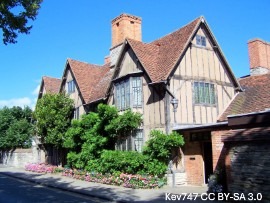
Stratford-upon-Avon home of Shakespeare's daughter is 'At Risk'
Lady Grange’s House repaired on St Kilda
.jpg)
National Trust for Scotland repairs stone cleit with link to famous island resident
Griff Rhys Jones on BBC Radio 4 Today programme
,_Green_Lane,_Derby.jpg)
The Victorian Society’s President unveiled its latest Top Ten Endangered Buildings 2026.
Need a MATE? Book your place now.
IHBC offers free webinars on applying for IHBC accreditation (Full & Associate).
UK Stained Glass Repository finds windows new homes
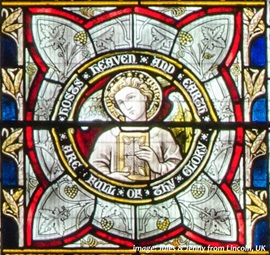
How are stained glass windows are rescued, stored and repurposed?
APPGEBE report sets high aims for quality
'Government must not sacrifice quality in drive to build 1.5m homes'
New measures protect Historic Shipwrecks from heritage crime

Underwater cultural heritage benefits from new HE guidance
How could the City of London skyline look in 6 years' time?

Visualisation shows approved planning applications as completed buildings
National Trust for Scotland calls for VAT cuts
Heritage neglect is encouraged by current policies
IHBC's 'Context' Issue 186 features Industrial Heritage
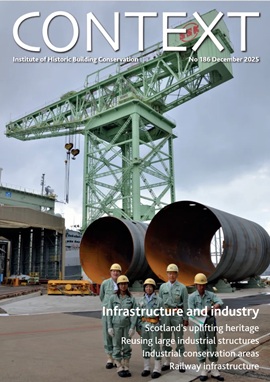
IHBC's members' journal reports on the challenges of conserving infrastructure
Book now for IHBC Annual School 2026
IHBC Annual School is taking place 18-20 June 2026 in Newcastle
RICHeS Research Infrastructure offers ‘Full Access Fund Call’
RICHeS offers a ‘Help’ webinar on 11 March
Latest IHBC Issue of Context features Roofing
Articles range from slate to pitched roofs, and carbon impact to solar generation to roofscapes
Three reasons not to demolish Edinburgh’s Argyle House

Should 'Edinburgh's ugliest building' be saved?
IHBC’s 2025 Parliamentary Briefing...from Crafts in Crisis to Rubbish Retrofit
IHBC launches research-led ‘5 Commitments to Help Heritage Skills in Conservation’
How RDSAP 10.2 impacts EPC assessments in traditional buildings

Energy performance certificates (EPCs) tell us how energy efficient our buildings are, but the way these certificates are generated has changed.